Digital Billboard Cost: Pricing, CPMs, and What Brands Should Expect
An Introduction to the Present and Future of OOH Spend
Guide
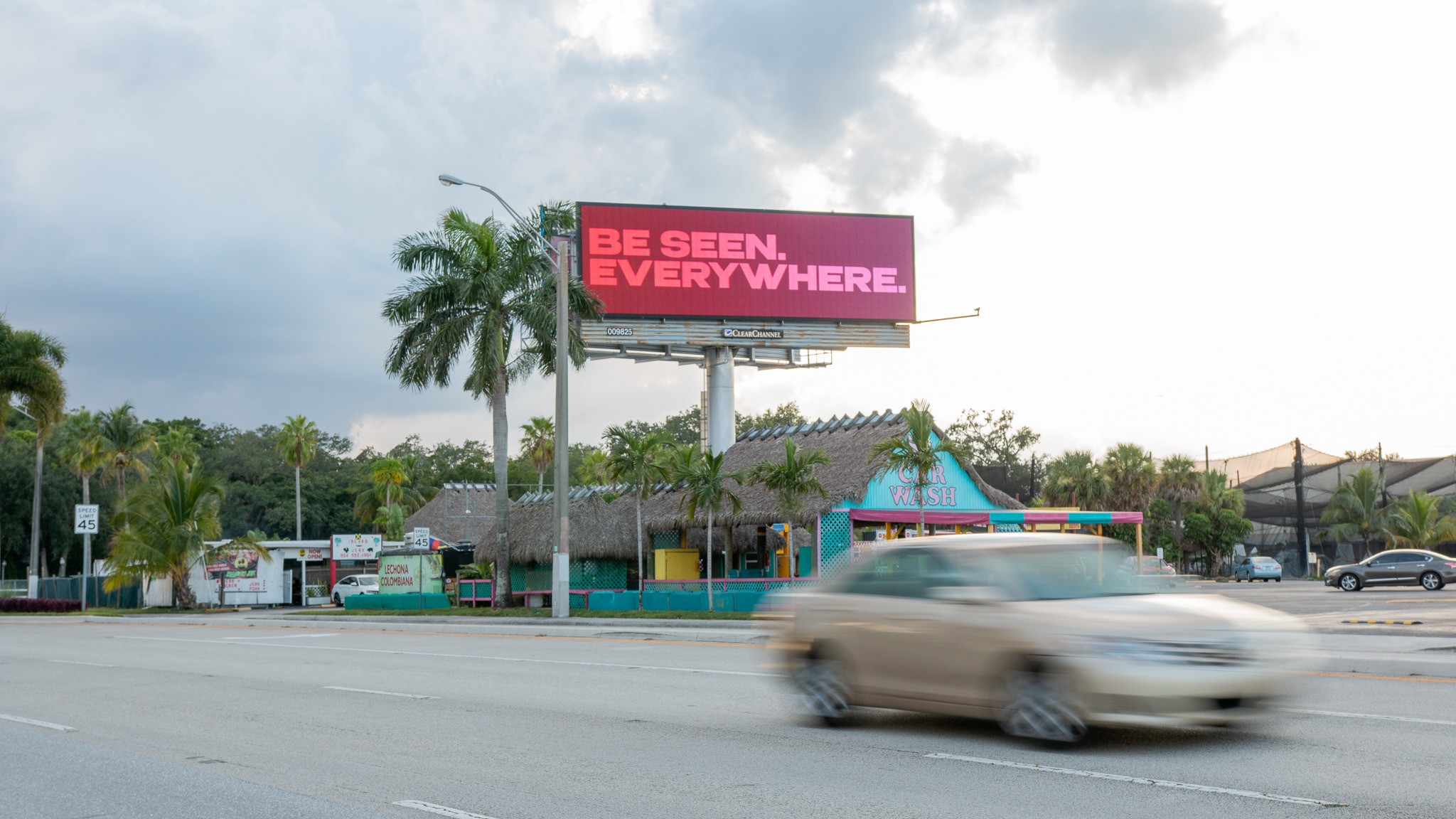
One of the most common questions in out-of-home advertising is simple:
How much does a digital billboard cost?
The answer depends on format, market, impressions, and buying method; but in 2026, pricing is more transparent and flexible than ever thanks to programmatic DOOH. Vue takes transparency and flexibility to the next level, providing sign images to let you know where you're buying, the ability to tailor costs to your budget and estimate flips/impressions directly, and planning down to the minute.
If you’re new to digital out-of-home, start with our breakdown of What Is Digital Out-of-Home (DOOH) to understand how the ecosystem works. In this guide, we’ll focus specifically on pricing.
The Short Answer: What Do Digital Billboards Cost?
Here’s a realistic range in 2026:
Small market digital billboard: $5–$15 CPM
Major metro digital billboard: $12–$30 CPM
Premium placements (Times Square, iconic units): $30–$80 CPM
High-impact retail media walls (like Brickell City Centre): premium market pricing depending on demand, but usually do not exceed the values of premium placements.
If you’re curious about premium inventory, see our guide on How to Book a Billboard in Times Square or explore our Inventory Spotlight: Brickell City Centre for a breakdown of high-impact retail placements.
But CPM alone doesn’t tell the full story.
What Actually Determines Digital Billboard Pricing?
1. Market (DMA)
New York, Miami, Los Angeles, and Chicago command higher CPMs due to demand and traffic density. Smaller DMAs are significantly more affordable. This does not mean that these cities by default are harder to plan smaller budgets in; using Vue will immediately reveal that if you have a sharp eye for placements, these DMAs are incredibly doable.
This is why outdoor is “quietly winning again,” as we explain in Outdoor Advertising Is Quietly Winning Again: brands are rediscovering efficient reach outside of saturated digital channels and finding effective space in big cities.
2. Impressions Per Play
Digital billboards rotate advertisers. A “15-second slot” does not mean you own the screen - while it is possible to own the screen, you will need an agency to help you with that process. That is why Elite Marketing Outdoor works with us to manage campaigns for those that have stronger ambitions and need technological savvy to make it happen.
Understanding how availability works (including how impressions are calculated) is critical. We break this down in detail in How Sign Availability Works in a DOOH DSP (and What the Bidstream Really Means).
3. Format and Venue Type
There’s a major difference between:
Highway digital bulletins
Urban street furniture
Retail media walls
Transit displays
Gym and fitness screens
Airport networks
Retail centers like Brickell City Centre offer high dwell time and affluent audiences, which can justify higher CPMs. So do private airline screens. These costs come with the fact that you have a hyper-specific audience that may be even more effectively targeted than by buying mobile ads.
4. Buying Method: Direct vs Programmatic
Traditionally, OOH pricing was negotiated manually.
In 2026, many scalable campaigns run through programmatic DOOH, allowing brands to:
Set budgets dynamically
Adjust dayparts
Optimize by location
Scale nationally in real time
If you're evaluating strategy, our article DOOH Doesn’t Have a Budget Problem. It Has a Strategy Problem. explains why smart allocation matters more than raw spend; we are entering a new era where billboard advertising is available for more than just multinational conglomerates. Small businesses can (and should) have a piece of the action.
Budget Examples: What Brands Typically Spend
Here are realistic starting points:
Local Campaign
3–5 digital billboards
4 weeks
$3,000–$10,000 total budget
Regional Campaign
10–25 screens
Multiple DMAs
$15,000–$75,000
National Campaign
50–500+ screens
Dynamic optimization
$100,000+
But one of the biggest myths is that outdoor requires massive upfront commitments.
It doesn’t. Especially when we rule in that programmatic allows you to pay as you play, rather than paying for a one month commitment ahead of time.
Modern DSP infrastructure allows advertisers to test smaller budgets, similar to paid social. We touch on this in Are Digital Billboards Worth It in 2026.
How to Think About ROI Instead of Cost
CPM is just one metric.
What matters is:
Audience density
Context
Brand lift
Incremental search traffic
Foot traffic correlation
For a deeper dive into measurement, read How DOOH Attribution Works: Measuring Performance.
The real advantage of digital billboards in 2026 is measurable brand impact in high-attention environments, not passive exposure. That is why Vue works with CubeIQ to provide the highest-quality metrics to brands that need it.
Why Pricing Feels More Transparent in 2026
Historically, OOH pricing felt opaque.
Now:
Inventory availability is visible in real time
Impression estimates are standardized
Campaign pacing is dynamic
You can see what you’re bidding on
Understanding availability mechanics is key — again, see How Sign Availability Works for the technical breakdown.
Transparency is one of the reasons DOOH adoption is accelerating globally.
So… Are Digital Billboards Expensive?
Compared to social CPMs? Not necessarily.
Compared to search? It depends on intent.
Compared to the brand impact of a high-traffic, full-motion screen in a premium retail center?
Often underpriced.
That’s why we continue to see performance-driven brands integrate DOOH into their media mix rather than treating it as a “brand only” channel — a misconception we address in DOOH Doesn’t Have a Budget Problem. It Has a Strategy Problem.
Final Thoughts: What Should You Expect to Pay?
If you’re planning a campaign in 2026, expect:
Flexible budgets
CPM-based pricing
Market variability
Premium cost for iconic inventory
Lower barriers to entry than ever before
And most importantly — clarity.
If you’re still evaluating whether DOOH fits your strategy, start with:
Then explore availability and pricing directly by signing up.
Because in 2026, billboard buying looks a lot more like digital media buying, just bigger, brighter, and harder to ignore.