How Sign Availability Works in a DOOH DSP (and What the Bidstream Really Means)
Learn how “available” inventory is determined in a DOOH DSP, what’s inside a bidstream, how OpenRTB requests map to real screens, and how to avoid common planning mistakes.
Guide
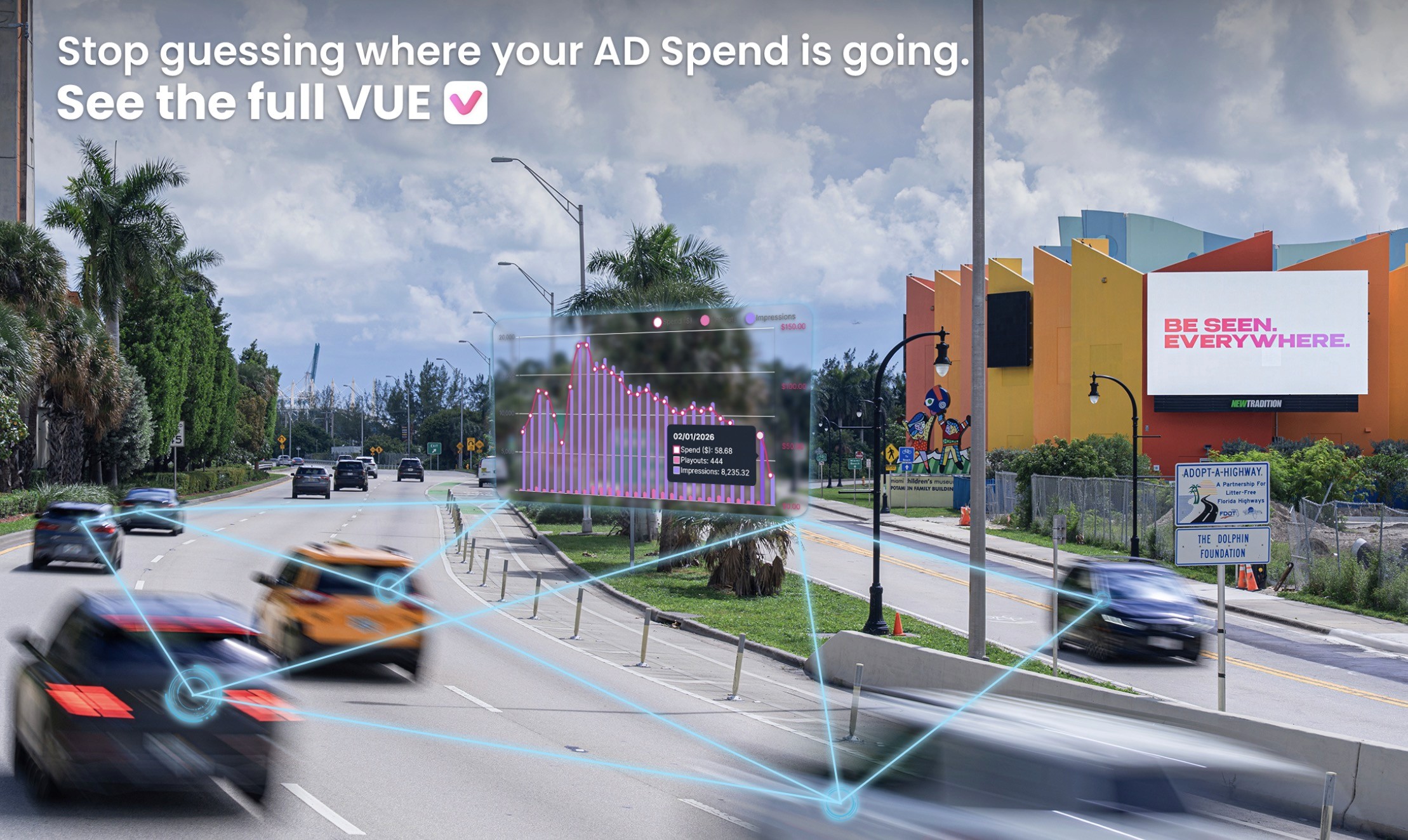
For buyers coming from digital, one of the most confusing parts of programmatic DOOH is “availability.” A sign looks selectable one moment, disappears the next, or delivers fewer plays than expected. Open a bid log and suddenly you’re staring at screen IDs, floors, and timestamps instead of a clean media plan.
This article breaks down how sign availability actually works inside a DOOH DSP, what information lives in the bidstream, and how platforms like Vue make that process transparent instead of abstract.
If you’re still grounding yourself in the basics of digital out-of-home, it helps to start with What Is Digital Out-of-Home (DOOH)? on the Vue blog. Once that foundation is clear, availability starts to make a lot more sense.
Availability in DOOH is capacity, not exclusivity
The most important mental shift is this: in DOOH, “available” does not mean “empty.”
Digital screens run loops. Each loop has a fixed amount of time, broken into individual ad slots. Availability simply means there is remaining capacity in that loop during the hours you’re targeting, at prices you’re willing to pay, under the creative and category rules that screen enforces.
You are not reserving a billboard the way you would in traditional OOH. You are competing for moments on a screen, just like you compete for impressions online.
That’s why availability is dynamic. It changes as other campaigns book capacity, as floors adjust based on demand, and as pacing rules shift throughout the day.
Why signs appear and disappear in a DSP
When buyers get frustrated with DOOH availability, it’s usually because one of a few things happened behind the scenes:
• Capacity was consumed by another campaign or a reservation
• Floors rose during high-demand hours
• Targeting became too restrictive (tight hours + tight geo + limited formats)
• Creative or category restrictions disqualified the ad
• The supply path changed between open auction and deals
This is why Vue often emphasizes strategy over spectacle. If your plan relies on a single hero screen, availability swings will feel brutal. If your plan uses clusters, redundancy, and flexible hours, delivery stabilizes.
That idea is explored more deeply in DOOH Doesn’t Have a Budget Problem. It Has a Strategy Problem, which reframes availability as a planning issue, not a supply issue.
Two kinds of availability you’re buying
Open exchange
In open auction, screens are offered in real time. Each bid request is a chance to win a play. This mode is flexible and ideal for testing, but it’s also the most sensitive to competition and demand shifts.
Availability here isn’t guaranteed, it’s probabilistic.
PMP and deal-based inventory
Deals introduce structure. Floors are defined, access is curated, and competition is limited to buyers inside that deal. You still bid, but within a more predictable lane.
Most scalable DOOH strategies use a mix of both: open auction for flexibility, deals for consistency.
What the bidstream actually is
The bidstream is the continuous flow of opportunities being sent from supply partners to the DSP. Each request represents a real moment when a screen is about to play content and is asking: “Do you want this slot?”
These requests are usually formatted using OpenRTB, adapted for DOOH. In practical terms, every bid request answers five questions:
What screen is this?
Where is it located?
When would the ad run?
What formats and categories are allowed?
How is this slot being sold (open auction or deal)?
If availability feels opaque, it’s because most platforms abstract this information away. Vue takes the opposite approach.
How Vue surfaces real availability
Vue updates sign availability every 24 hours using active hourly bidstream impression data. Instead of showing static inventory lists or theoretical reach, the platform reflects what is actually flowing through the marketplace.
Each sign’s availability is informed by:
• Real bid requests observed at the hourly level
• Active demand and pacing conditions
• Deal eligibility and open auction supply
• Creative and category constraints
This means when a sign appears available in Vue, it’s grounded in recent, real bidstream activity and not a stale spreadsheet or a media owner promise.
That same bidstream data also feeds Vue’s live monitoring tools, which allow buyers to see how often screens are eligible, how often bids are forwarded, and where delivery friction might exist.
This transparency is what makes DOOH feel closer to digital performance media, a theme expanded on in How DOOH Attribution Works: Measuring Sales and Performance from Billboard Advertising.
From availability to delivery
Once a bid request enters the DSP, delivery follows a predictable pipeline:
First, eligibility: does the request match your geo, hours, format, and category rules?
Second, pacing: should the DSP bid now or conserve budget for later hours?
Third, pricing: what bid clears the floor efficiently?
Fourth, auction outcome: win or lose.
Finally, verification: the screen reports that the ad actually played.
That last step is what makes modern DOOH fundamentally different from legacy OOH. Plays are logged, verified, and reported— not inferred.
Vue’s approach to availability is built around this full pipeline, not just the top of the funnel.
Why supply path transparency matters
The same screen can appear through multiple supply paths: open auction, preferred deals, or different reseller relationships. These paths affect floors, availability, and win rates.
Understanding where availability is coming from, not just that it exists, is critical when performance matters. Inconsistent delivery is often a supply path issue, not a budgeting one.
Planning for stable availability
Campaigns that perform well in DOOH tend to follow a few rules:
• Use clusters instead of single hero screens
• Spread delivery across multiple hours, not just peak
• Keep creative specs simple to maximize eligibility
• Blend open auction with deals
• Measure delivery like a performance channel, not a branding afterthought
Vue’s inventory spotlights, like the Brickell City Centre breakdown, are good examples of how context, clustering, and realistic availability work together in practice.
The takeaway
In a DSP, you are not booking a billboard. You are participating in a real-time marketplace for screen time.
Availability is not fixed. It’s a living forecast shaped by bidstream activity, pricing, constraints, and demand. Once you understand that, the mystery disappears — and DOOH becomes something you can plan, optimize, and scale with confidence.
And that’s where modern DOOH quietly wins: not by being louder, but by being smarter.