How to Book a Billboard in Times Square
How to Book a Billboard in Times Square
Guides
How to Advertise in Times Square with DOOH (A Complete, Practical Guide)
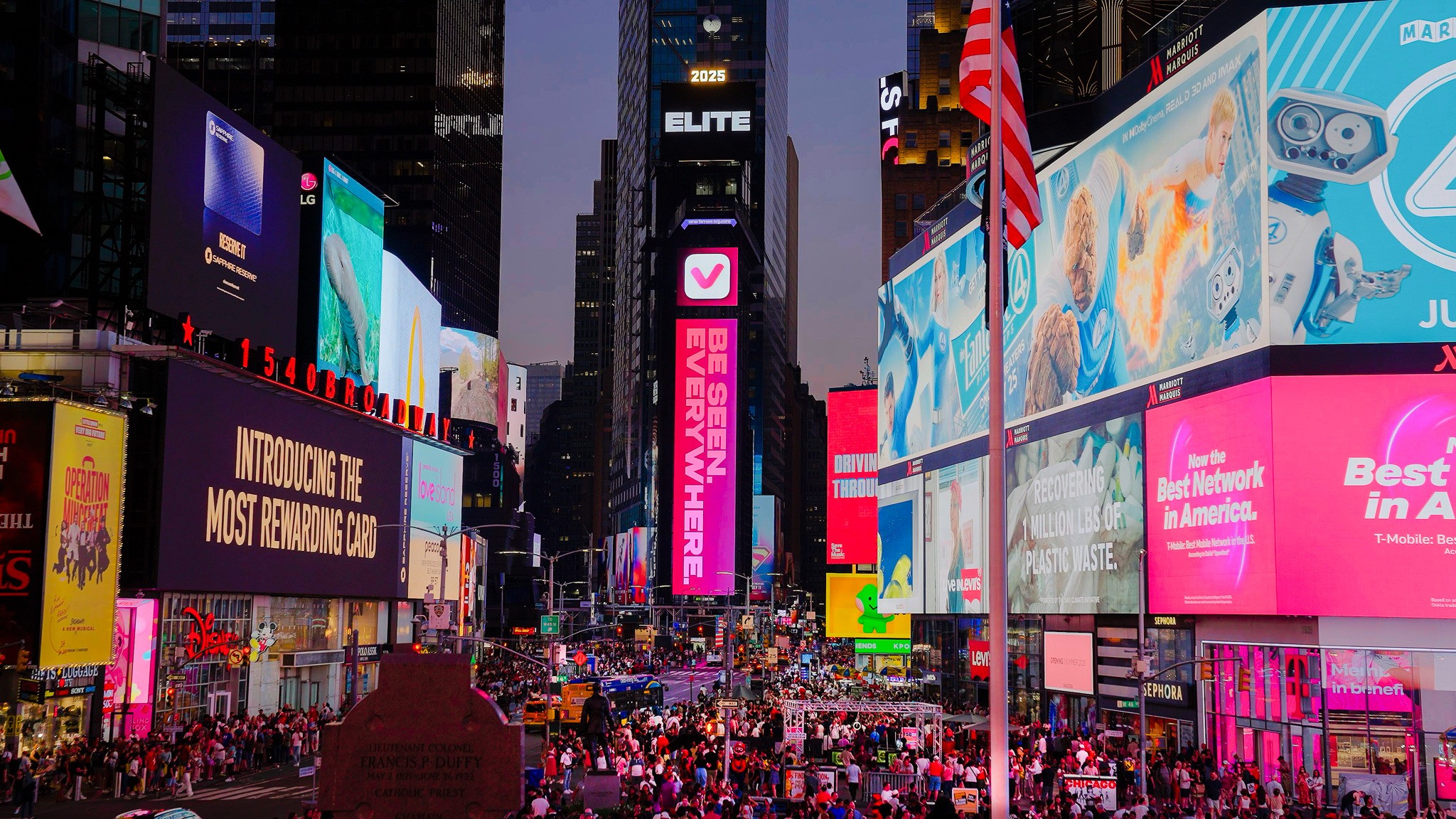
Times Square is one of the most concentrated digital out-of-home (DOOH) advertising environments in the world. With hundreds of digital screens, millions of weekly impressions, and constant global visibility through social media and broadcast, it represents both an enormous opportunity and a source of confusion for advertisers. It is, for us, the filet mignon of advertising spaces.
This guide explains how DOOH advertising in Times Square actually works — what kinds of screens exist, how they’re bought, what they cost, and how modern platforms like Vue Billboards fit into the ecosystem.
If you’re new to the category, start with our primer on what DOOH advertising is, then return here to understand how that model applies specifically to Times Square.
What “Times Square Billboard Advertising” Really Means
One of the biggest misconceptions is that “Times Square billboards” are a single product. In reality, Times Square includes multiple DOOH formats, each with different buying methods, pricing models, and campaign goals.
Understanding these distinctions is critical before you book anything.
Types of DOOH Screens in Times Square
1. Iconic Digital Spectaculars (Premium Assets)
These are the building-scale LED screens that define Times Square’s visual identity — often featured in New Year’s Eve broadcasts and major brand stunts.
Key characteristics:
Typically sold directly by media owners or exclusive reps
High minimum spends
Longer lead times
Often booked as daily or multi-day takeovers
Limited availability during peak seasons
These units are ideal for brand launches, PR moments, or campaigns where cultural impact matters more than frequency.
2. Large-Format Digital Billboards (Shared Loop)
Many Times Square billboards operate on a shared-loop model, where multiple advertisers rotate through a fixed playlist (often every 2–3 minutes).
Why these matter:
Strong balance of visibility and cost
Common entry point for first-time Times Square advertisers
Flexible scheduling compared to spectaculars
This is where most DOOH buyers find meaningful scale without premium takeover pricing.
3. Street-Level DOOH (Kiosks, Urban Panels)
Street-level formats prioritize frequency and proximity. These screens are closer to pedestrians and often easier to read at walking speed.
Examples include:
Digital totems
Kiosk-style panels
Urban sidewalk displays
They are especially effective for QR codes, directional messaging, and performance-oriented campaigns. They provide a unique way to reach people in a way that avoids being drowned out by all of the hustle-and-bustle of Times Square's many signs.
4. Transit & Hub Screens Near Times Square
DOOH inventory extends beyond the Bowtie itself into nearby transit corridors, including:
Port Authority Bus Terminal
Penn Station
Commuter walkways and concourses
These placements benefit from high repetition, making them useful for sustained messaging.
5. Personal or “Moment” Billboards
Some offerings are sold as package experiences, often marketed as:
“15 seconds every hour for 24 hours”
Birthday or proposal messages
Photo or short video placements
These should be treated as a different category from media-owner inventory. Always verify:
Exact screen location
Proof-of-play delivery
Usage rights and policies
How DOOH in Times Square Is Bought (3 Real Paths)
Path A: Direct with Media Owners or Exclusive Reps
Best suited for:
Iconic spectaculars
Long-term brand commitments
Complex sponsorships
This route typically involves negotiations, fixed contracts, and limited flexibility. Without a solid understanding of the industry and a pre-existing relationship with the sign owners, we'd recommend you pursue the below options.
Path B: Through an Agency
Agencies are valuable when:
Coordinating multi-format campaigns
Negotiating premium inventory
Managing creative variations and approvals
They add expertise but also increase cost and lead time. Luckily, Vue is owned by an agency (Elite Marketing Outdoor), so even using our in-app chat feature can connect you to industry professionals with expertise here.
Path C: Programmatic / Self-Serve DOOH Platforms
This is where modern DOOH has changed the market.
Using platforms like Vue Billboards, advertisers can:
Browse available Times Square inventory
See transparent pricing
Choose specific dates and times
Buy by play or by hour instead of by month
Important nuance: Programmatic DOOH does not guarantee access to every premium screen during peak demand periods (e.g., holidays). Planning ahead still matters, but Vue works to secure the spots and has live availability tracking.
Where Vue Billboards Fits
Vue Billboards operates as a self-serve DOOH platform, designed for speed, flexibility, and transparency.
Instead of the traditional “billboard per month” model, Vue allows advertisers to:
Activate campaigns quickly
Test Times Square inventory without long commitments
Adjust schedules based on performance or budget
This makes Times Square DOOH accessible not just to major brands, but also to startups, local businesses, creators, and performance marketers. The era of lacking transparency in DOOH is over - and Vue is doing everything possible to ensure it.
Step-by-Step: Advertising in Times Square with DOOH
Define your goal - Brand awareness, PR moment, frequency, or personal milestone
Choose screen type - Spectacular, shared-loop, street-level, or transit
Select dates and dayparts - Demand spikes around holidays, weekends, and major events
Choose booking method - Direct, agency, or programmatic platform
Prepare creative - Most placements use 10–15 second spots
Complete approvals - Content restrictions vary by operator
Verify delivery - Proof-of-play logs and photo/video capture
Creative Best Practices for Times Square DOOH
Times Square is visually dense. Counterintuitively, you get more by putting less: simplicity attracts more attention than complexity!
Rules of thumb from the Elite Marketing team:
One message, one product, one call-to-action
Readable in seconds
Large typography, high contrasting color selection
Designed to be photographed or filmed
Avoid small text, subtle gradients, or complex narratives.
How Much Does a Billboard in Times Square Cost?
Pricing varies dramatically based on:
Screen type
Time of year
Daypart
Buying method
Typical ranges:
Personal or street-level DOOH: tens to hundreds of dollars per day
Shared-loop digital billboards: as low as hundreds per day
Premium spectaculars: up to five figures for peak placements.
Vue works as a programmatic platform that allows buyers to pay for the time they actually need, rather than locking into long-term contracts. We bring your requests directly to the sign owners and are connected to Elite Marketing Agency, who can make requests and advocate for your needs.
Rules, Zoning, and What You Don’t Have to Worry About
Times Square is a special signage district with unique zoning rules. The good news:
Advertisers do not file permits themselves
Media owners handle compliance and registration
Advertisers only need to follow content guidelines
Expect creative reviews and category restrictions to vary by screen. All category restrictions are helpfully displayed in the Vue app/website.
Are Times Square DOOH Campaigns Worth It?
Most likely, but importantly your goals have to actually match the medium.
Times Square excels at:
Cultural visibility
Brand legitimacy
Social amplification
High-impact moments
It is less effective for:
Hyper-local targeting
Long copy or educational messaging
The key is choosing the right format, duration, and buying method.
Final Takeaway
Times Square DOOH advertising is no longer reserved exclusively for massive brands with massive budgets. With modern digital inventory and programmatic access, advertisers can now engage this iconic environment with far more flexibility and control.
Vue exists to remove friction — not to replace strategy. Our platform allows advertisers to test, learn, and scale in one of the most visible advertising environments on Earth. If you're interested, sign up here.